Root depth changes the rules
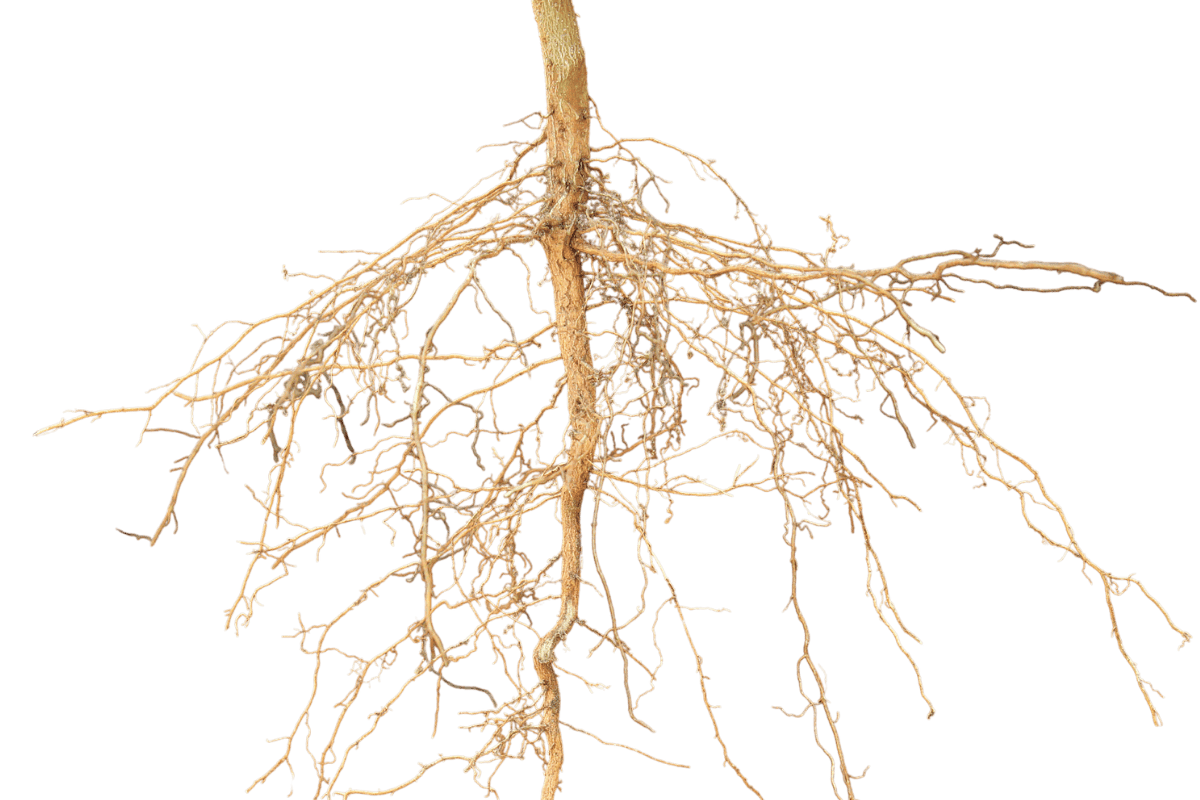
As roots grow deeper, plants gain access to a larger volume of soil and, therefore, a larger reservoir of stored water. Root systems are influenced by crop type, age, soil conditions, climate, and water availability. They also change throughout the season.
Selecting a practical root depth for irrigation management is a balance. While roots may extend very deep, the most active root zone is often closer to the surface. Managing irrigation based on the zone where roots are most effective helps avoid unnecessary deep drainage while still supporting plant needs.
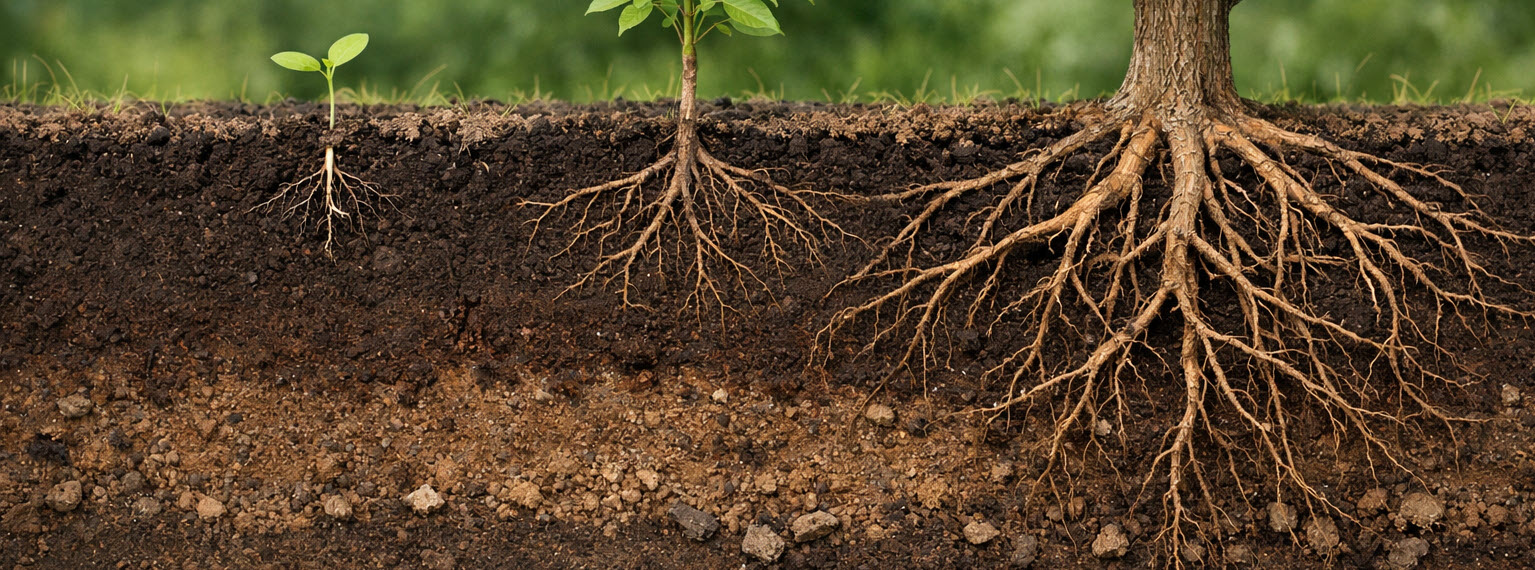
Root depth is not static. Reviewing and adjusting assumptions as crops develop is an important part of maintaining an accurate picture of available water. Shallow root systems rely on smaller, more frequent applications, while deeper systems can access a larger reserve and tolerate longer gaps between irrigation. Getting this balance wrong can lead to either early stress or unnecessary water loss.
Make irrigation decisions based on where roots are actually working.
Book a walkthrough to see how SWAN Systems supports practical root zone management.