



Root depth changes the rules
Root depth determines how much water a crop can access. Understanding where roots are most active helps guide irrigation decisions and avoid unnecessary water loss.
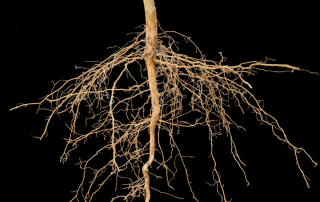
Root depth determines how much water a crop can access. Understanding where roots are most active helps guide irrigation decisions and avoid unnecessary water loss.
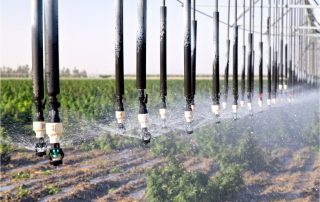
Soil is not a passive container for irrigation. It is a dynamic buffer that determines how water is stored, released, and made available to plant roots. Understanding soil behaviour changes how irrigation timing and volume should be managed.

Evapotranspiration is widely used in irrigation planning, yet it is often reduced to a number on a report. Its real value lies in understanding what that number represents: daily demand and the rate at which soil moisture is being depleted.
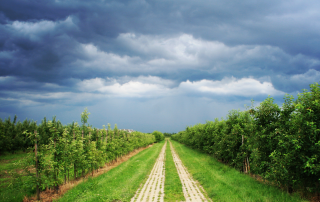
Rainfall and forecasts shape irrigation decisions long before anyone opens a valve. Understanding how weather affects infiltration, root behaviour, and crop demand is a core first principle of irrigation management.
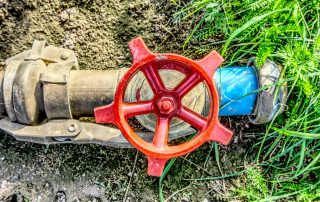
This is the first article in a short series on first principles of irrigation management - the fundamentals that underpin good decisions, regardless of crop, region, or system.
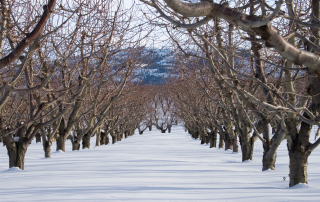
From winter dormancy to summer growth, cherries depend on stable soil moisture at critical stages. This article explores how steady irrigation and good water-management practices help reduce cracking, improve uniformity and lift fruit quality.